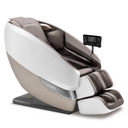


Shiatsu
Japanese pressure technique: rhythmic kneading along the muscle strands instead of broad stroking. It works deeper than classic massage and is the core technique of modern massage chairs. More in the Shiatsu guide.

Cart
Your cart is empty
Where would you like to start?
Popular right now
Added to cart
Complete the gift
Very popular · the ideal addition
10% off when you add it to the gift card
From the Relax Lounge


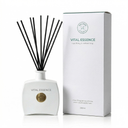
These are the exact scents used in our Relax Lounges. You pick yours when booking or on site. So the recipient gets an experience — and something they can hold.
Developed over two years from our guests' feedback. The range: Vital Essence, Calm Essence and Golden Comfort.
Reference work
Every term around massage, massage chairs and massage devices, explained briefly and honestly. Each term has its own anchor, so you can link directly to individual entries.
What is behind the names and which technique suits what.
Japanese pressure technique: rhythmic kneading along the muscle strands instead of broad stroking. It works deeper than classic massage and is the core technique of modern massage chairs. More in the Shiatsu guide.
A gripping, circling motion that lifts and works the muscle like dough. It releases knots and stimulates circulation. In a chair, counter-rotating massage heads do the work.
Short, fast impulses on the muscle, like the edge of a masseur's hands. Stimulating and loosening, good before activity. Many chairs combine tapping and kneading in one programme.
Massage heads roll along the back under pressure, like two thumbs following the spine. The basic movement of every chair massage, and comfortable for beginners.
A NAIPO technique on a patented rail: slow, flowing arcs instead of straight tracks. Built for gentle, even relaxation, for example in the Tai Chi Flow model.
Alternating stretch, pressure and guided movement, traditionally on a floor mat. The most intense of the widespread massage styles, felt right into the fascia. Everything that matters in the Thai massage guide.
Hawaiian technique with long, flowing forearm strokes. Barely any pressure peaks, plenty of rhythm, very relaxing. What exactly happens is described in the Lomi Lomi article.
Targeted pressure on defined zones of the sole. Noticeable straight away after long periods of standing. In chairs the foot rollers in the footrest do this; details in the Reflexology guide.
Gently building pressure from the feet upwards. Massage chairs and devices with air compression follow this principle, which feels good on tired legs. Medical lymphatic drainage remains a therapist's work. More in the Guide.
Fine, fast oscillations that loosen a wide area instead of pressing on one point. Often an extra function in the seat or footrest, and a pleasant way to finish.
Treatment from neck to foot in one session. In the chair the track, air cushions and foot rollers work together for this. The basics and the sequence are explained in the Massage knowledge.
The terms from product pages and data sheets, honestly explained.
Massage heads move in two directions, up and down as well as sideways. Precise and even, the solid basis. The full comparison: 2D, 3D or 4D.
On top of the flat plane, the heads also move in depth, so pressure can be dosed like a firm or a gentle thumb. Much closer to the feel of real hands than 2D.
3D plus variable speed within the movement: the heads accelerate and slow down like a human hand. Currently the highest level. Terms such as 5D or 8D are marketing without a technical definition.
A guide rail that follows the natural S-curve of the spine. The massage heads keep even contact throughout, from the neck vertebrae down to the lower back.
An extended rail that continues under the seat to the thighs. More reach than the plain back track, but without the anatomical curve of the S shape.
A combination of both: the anatomical S-curve plus an extended track down to the seat, usually 110 to 135 cm. Today the standard in good chairs; the exact length per model is in the Comparison database.
Before the massage, the chair measures back length and shoulder position and adjusts the path of the massage heads. That is why one chair suits many body heights. How it works technically: Body scan explained.
A reclined position with raised legs, modelled on how astronauts sit at launch. It spreads body weight evenly and lets the back rest relaxed against the mechanism. Whether it is worth it: Zero gravity guide.
Air cushions wrap around shoulders, arms, calves or feet and squeeze and release in turn. They add the feel of gripping hands to the back massage. Good chairs have 24 to 40 cushions.
The footrest gently stretches the legs while air cushions hold the calves. In top models it is powered and combined with kneading, modelled on stretching at a therapist.
Heating elements in the lower back, the back or the calves. Warmth loosens the muscle first, so the massage reaches deeper and feels better. Where exactly a model heats is shown in the Comparison database.
Pre-choreographed routines that combine techniques, areas and intensities, from a short neck programme to a full-body session. Good chairs offer 12 to 24 of them plus manual fine-tuning.
These set pressure, speed and, on 3D/4D, how deep the heads go, usually across 3 to 5 levels. It matters in a household where gentle and firm preferences meet.
The chair stores favourite settings per person. Set up once, your own massage starts at the push of a button without adjusting it every time.
A manufacturer figure such as 150 to 200 cm. These are guide values for a perfect fit, not hard limits; above 190 cm it usually works without trouble too. The surest way is Try one out.
Maximum user weight according to the manufacturer; at NAIPO between 100 and 150 kg depending on the model. What matters is the stability of frame and mechanics, not the padding.
The compact helpers for individual areas of the body.
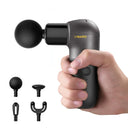
Cordless handheld device delivering fast, pinpoint percussion deep into the muscle. Standard in sports recovery, with interchangeable heads per muscle group. Selection: Massage guns.
Shiatsu mechanics as a pad for a chair or sofa. The flexible solution for the back when space or budget does not allow a chair yet. Selection: Massage pads.
U-shaped device that sits around neck and shoulders and kneads with rotating heads, often with heat. The classic against desk-related tension. Selection: Neck massagers.
Kneads the soles and the edges of the feet with rotating heads, depending on the model with heat, air compression or water. Guide and selection: Foot massage knowledge und all devices.
Compact cushion with kneading heads for neck, back or lower back, at home as well as in the office. The smallest entry point into the world of devices. Selection: Massage cushions.
Goggle-shaped device with gentle air pressure, heat and vibration around the eye area. Relief after long days in front of a screen. Selection: Eye massagers.
Air cuffs around the calves or legs inflate and deflate in turn, modelled on the principle of lymphatic drainage. It feels good on tired, heavy legs. Selection: Devices with calf cuffs.
Radiant heat that warms not only the surface but noticeably the tissue underneath. Used in foot massagers and chairs to prepare the muscle.
Electrical muscle stimulation: weak electrical impulses make muscles tense and release rhythmically. A different principle from mechanical massage; a tingling feeling is normal, and the intensity must always be adjustable.
Terms around choosing, operating and buying.
Returned or display chairs that our own technicians inspect, refurbish and sell again, considerably cheaper than new. Selection: refurbished chairs.
The safest route to the right choice: experience the models in a shop instead of only comparing data sheets. NAIPO locations and partners are listed in the Store locator.
Depending on the model, NAIPO chairs draw 45 to 180 watts. At one hour a day that is roughly 5 to 23 euros of electricity a year; the figure per model is in the Comparison database.
A companion piece of furniture without a massage function of its own, used as a rest or a seat extension. Not to be confused with the powered footrest of the chair itself.
A commercial chair with a payment function for hotels, centres and waiting areas: guests pay per massage by coin or QR code. A business model of its own, with sturdier engineering than a home chair.
The EU General Product Safety Regulation. It obliges retailers to give clear manufacturer and safety details on the product; that information is on every product page.
An umbrella term for anything that aids recovery, from massage to heat treatment. With products it pays to look at the actual functions rather than the label.
Term not found? Write to service@naipo.de, we keep adding to the glossary. Technical data for every chair model is in the Comparison database, and the quickest route to the right model is shown by the Chair finder.
Book faster, get event info, and use exclusive features—all in one app.


 Scan
Scan
Why NAIPO?
When making a purchase like this, trust is everything. Here, you can see transparently how NAIPO is rated on independent platforms and what stands behind the brand.
Advice from the NAIPO teamFree. Hamburg-based team.Google Customer Reviews
Rating and count come directly from Google, not from our shop.
Loading from Google.
All ratings come from external review platforms — the links lead directly to the respective source. The authenticity of the reviews is the responsibility of the respective platform. As of: July 2026


