





Matching products and services for Massage knowledge
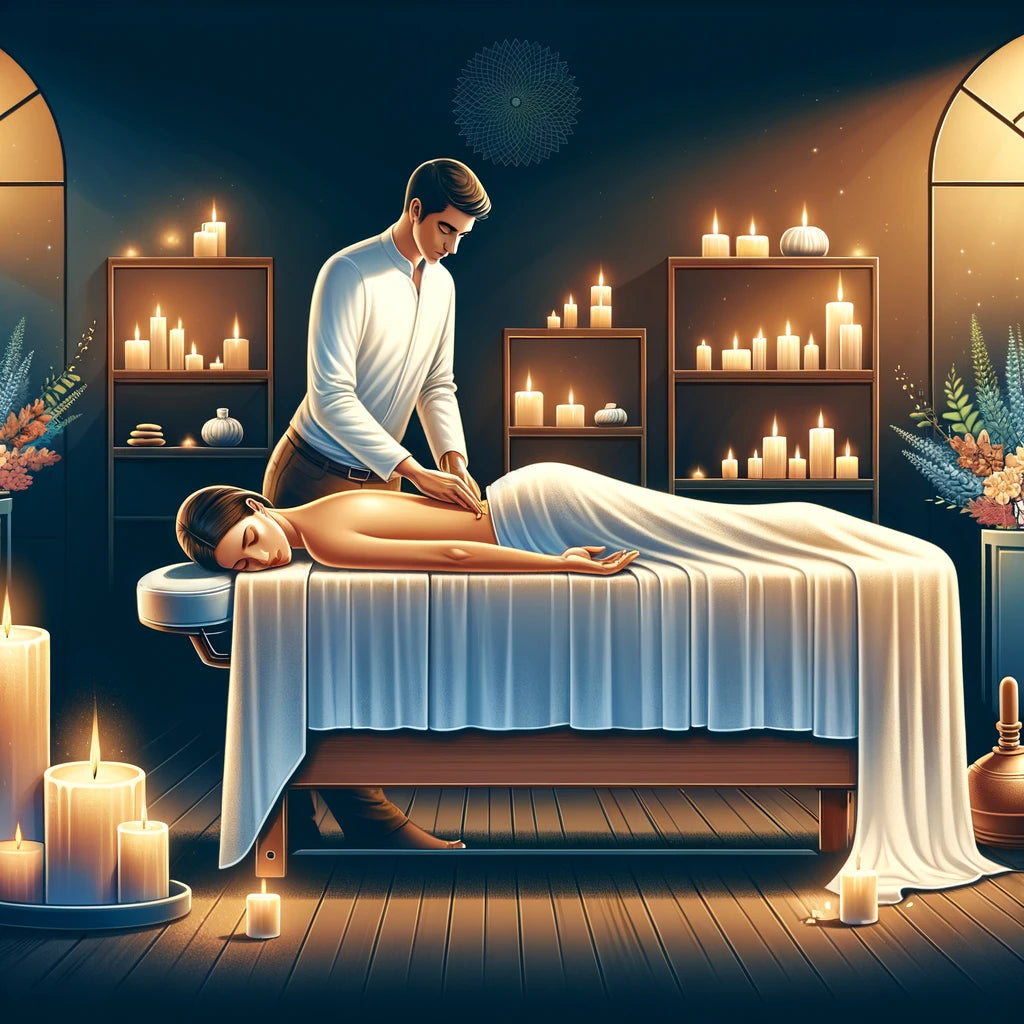
During a full-body massage, the therapist uses five basic techniques: effleurage, petrissage, friction, tapotement, and vibration. Each body region receives its own combination of these techniques, and the sequence is almost always the same. Here's what each technique does, what actually happens to your back, legs, arms, and neck, and how you can tell if the work is being done properly.
The five basic techniques
- Effleurage (Stroking). Broad, gliding strokes with the whole hand, usually towards the heart. This is how almost every region begins and ends. It spreads the oil, warms up the tissue, and gives the body time to adjust to the touch.
- Petrissage (Kneading). The muscles are lifted and worked between the thumb and fingers, similar to kneading dough. This is the core of the massage and the technique most people think of when they imagine a massage.
- Friction (Rubbing). Small, circular movements with the thumb or fingertips, precisely targeting a specific tight spot. This is the most intense of the five techniques and the one that is most likely to make you flinch.
- Tapotement (Tapping). Short, loose strokes with the edge of the hand or a cupped hand. It has a stimulating rather than calming effect, so it's more likely to be used at the end or in a sports massage.
- Vibration. Fine shaking with a placed hand. Often used to conclude a region.
No studio rigidly applies all five. Good therapists vary them depending on what they feel under their hands.
What each region receives
Back. The longest section, usually one-third of the time. First, broad effleurage over the entire length, then petrissage of the muscle strands to the left and right of the spine, then targeted friction on the tight spots. The spine itself is not worked on, only the areas next to it.
Neck and shoulders. The area that is most often tense. Here, the work is more detailed, often done while sitting or with the head turned to the side. The trapezius muscle between the neck and shoulder receives the most attention.
Legs. First the back of the legs, calves and hamstrings, then the front in a supine position. Strokes are applied from bottom to top, i.e., towards the heart. The back of the knee is avoided, as vessels run close to the skin there.
Feet. Strong thumb pressure on the sole, manipulation of the toes. For many, this is either the most pleasant or the most ticklish part, with little in between.
Matching products and services for Massage knowledge
Arms and hands. Kept short, usually two to three minutes per side. Effleurage from the wrist to the shoulder, petrissage of the upper arm, thumb pressure in the palm.
Abdomen. Only with express consent and always very gentle, in circular clockwise movements.
The sequence
Almost all studios work upwards from the legs, starting in a prone position: backs of the legs, back, neck, and shoulders. Then you turn over, and the fronts of the legs, arms, possibly the abdomen, and finally often the neck and head again follow.
The reason for this sequence is practical: the back needs the most time and is therefore treated early, while the session is still long. For the overall procedure, from reception to resting afterwards, see here: how a full-body massage proceeds.
What the individual techniques are supposed to achieve
Each technique has its own goal. This is cautiously phrased because the scientific evidence for massage as a whole is thinner than advertising suggests:
- Effleurage prepares. It warms up the tissue and reduces the defensive tension with which every body reacts to a foreign hand. Without this beginning, everything else feels harsher.
- Petrissage targets the musculature itself. Many describe a feeling of looseness in the treated area afterwards.
- Friction works on individual tight spots. This is the technique where a point first feels uncomfortable and then often significantly softer.
- Tapotement has a stimulating rather than calming effect. That's why it's used before a competition and not at the end of a wellness treatment.
- Vibration concludes a region and transitions to the next.
How long these effects last is individual. How often a treatment is beneficial is covered in a separate article: how often one should get a massage.
How to prepare
Little, but it helps. Don't eat right before, especially not a heavy meal, because lying on your stomach will make pressure on the abdominal area uncomfortable. Shower beforehand; this isn't a matter of politeness, but more pleasant for both sides. Remove jewelry and watches and tie up long hair.
At the beginning, say two things: where you have discomfort and which areas you'd like to skip. Both are normal requests and no one will question them. What to wear and what to take off: what to take off for a massage.
Discover the NAIPO App now
Book faster, get event info, and use exclusive features—all in one app.


 Scan
Scan


