





In Germany, when someone books ‘a massage’, in the vast majority of cases they receive a Swedish massage — even if the menu lists it as a ‘classic massage’ or simply a ‘back massage’. It is the basic form from which almost all Western massage techniques have evolved, and at its core it consists of five strokes. This article explains what these strokes do, how a session is conducted, and why it’s the best place to start if you’ve never had a massage before.
Prikaži sadržaj
- Sljedeći članak: Što trebam skinuti na masaži?
- Sljedeći članak: Which massage involves massaging everything?
- Sljedeći članak: Does a full body massage include the breast massage?
- Sljedeći članak: Što je francuska masaža?
- Sljedeći članak: Do you tip for a massage? How much is usual
- Sljedeći članak: What does a full body massage include? The areas left out
Summary/TLDR
Swedish massage — usually referred to as ‘classical massage’ in German-speaking countries — was developed by the Swede Per Henrik Ling and utilises five basic techniques: stroking (effleurage), kneading (petrissage), friction (friction), tapping (tapotement) and vibration (vibration). The treatment is carried out on a massage table using oil, whilst the client is unclothed and covered with a towel. The pressure is moderate and can be adjusted at any time. A session lasts 30 to 90 minutes and costs around 45 to 100 euros in Germany. It is the most versatile form of massage and the ideal introduction for anyone trying it for the first time. It is not suitable for acute inflammation, fever, thrombosis, recent injuries or open wounds in the area to be treated.
The origins of Swedish massage
It is named after Per Henrik Ling (1776–1839), a Swedish fencing master and gymnastics teacher who combined the study of movement with manual techniques to form a system. It was popularised and developed into the form taught today by the Dutchman Johann Georg Mezger, who gave the techniques their French names, which are still in use today.
This explains the confusion over terminology: in the English-speaking world it is called Swedish massage, in Germany it is usually referred to as classical massage, and in medical contexts as classical massage therapy. They all refer to the same thing.
The five basic techniques
| Technique | What happens | Purpose |
|---|---|---|
|
Effleurage ( stroking) |
Long, gliding strokes with the flat of the hand, usually towards the heart | To begin and conclude treatment of each area; to warm up the tissue; to soothe |
|
Petrissage ( kneading) |
Muscles are lifted, rolled and worked between the hands | The main part. Releases tension, improves blood circulation |
|
Friction |
Small circular or transverse movements using the thumbs or fingertips | Targeting areas of stiffness and tendon attachments |
|
Tapotement ( tapping) |
Rhythmic tapping, patting or clapping with the edge of the hand or the palm | Stimulating, promotes blood circulation. Often omitted in relaxation massages |
|
Vibration ( shaking) |
A gentle trembling or shaking of a limb | Used to relax the body at the end of the session, particularly on the arms and legs |
The structure is always the same: start gently, increase in intensity, and finish gently. A good treatment begins and ends with effleurage on each area of the body. If a massage starts straight away with vigorous kneading, the warm-up phase is missing — this is uncomfortable and less effective.
How a treatment proceeds
- A brief preliminary discussion. Ailments, pre-existing conditions, medication, areas you’d like to focus on. Five minutes that significantly improve the treatment.
- Changing. You lie down undressed or in your underwear under a towel. Only the area currently being treated is uncovered.
- Lying on your back or stomach, depending on the focus of the treatment. For a back massage, the session begins with you lying on your stomach.
- Warming up with oil. Long strokes across the entire area.
- Main part. Kneading and rubbing, spending more time on tense areas.
- Conclusion. Stroking movements, often with vibration on the limbs.
- Rest period. Stay lying down for a few minutes, then get up slowly.
Standard treatments include the back and neck (30 minutes), the back, neck and legs (45 minutes) or a full-body treatment (60 to 90 minutes). What is actually covered during a full-body treatment is explained in ‘How does a full-body massage work?’ and ‘What is not massaged during a full-body massage?’.
How it feels
Pleasant to noticeable, but not painful. The pressure used in a Swedish massage is moderate and is constantly adjusted — unlike in Thai massage or deep tissue massage, which deliberately push the limits.
In tense areas, you’ll feel a distinct pressure-induced pain, which disappears immediately as the pressure is released. This is normal. Stabbing or radiating pain is not normal and should be reported straight away.
The most important phrase for your first session: ‘A bit firmer’ or ‘a bit gentler, please.’ Good therapists will ask of their own accord, but they cannot guess. What is normal afterwards and what isn’t is explained in the section on pain after the massage.
What it achieves
- Tension. Kneading and rubbing reduce the resting tone of stiff muscles — this is the core effect.
- Blood circulation. Strokes towards the heart support venous return.
- Mobility. Relaxed muscles allow for a greater range of motion.
- Stress and sleep. Rhythmic touch activates the parasympathetic nervous system; many people sleep better the following night.
- Back pain. For non-specific back pain, there are studies showing positive short-term effects, comparable to other manual therapies.
- Sore muscles and recovery. Widely used as a complementary treatment after exercise — massage helps with sore muscles .
What it cannot do: resolve structural problems. Herniated discs, osteoarthritis or inflammatory conditions must be assessed by a doctor. A massage can be a complementary treatment, but it is no substitute for a diagnosis.
Swedish, Thai, Shiatsu or deep tissue?
| Swedish | Deep Tissue | Thai | Shiatsu | |
|---|---|---|---|---|
| Oil | Yes | yes | no | no |
| Clothed | no | no | yes | yes |
| medium | high | high | medium to high | |
| Elongation | negligible | negligible | extensive | limited |
| How you feel afterwards | relaxed | well-structured | alert, agile | calm, grounded |
| For beginners | ideal | too intense | takes some getting used to | Good |
In-depth: What is a deep-tissue massage? What are the differences between a standard massage, Thai massage, Chinese massage and Tuina? An overview of all these forms can be found in An overview of massage types.
Duration, cost and frequency
- Back and neck, 30 mins: €35–50
- Partial body, 45 mins: €50–70
- Full body, 60 mins: €60–90
- Full body, 90 mins: €90–130
An important distinction: as a medically prescribed form of classical massage therapy, the treatment is considered a medical remedy and is covered by statutory health insurance where indicated, subject to a co-payment. This is different from a wellness massage at a spa — it requires a doctor’s prescription, takes place in a physiotherapy practice, and often involves a shorter treatment time. A comprehensive price comparison can be found in ‘How much does a massage cost?’.
Regarding frequency: for acute tension, two to four sessions at weekly intervals; for maintenance, once a month. More on this in ‘How often should you have a massage for severe tension?’.
When it is not recommended
- acute inflammation, fever, infections
- thrombosis or suspected thrombosis
- recent injuries, bruises, fractures
- open wounds, eczema, sunburn, infectious skin conditions in the treatment area
- Acute slipped disc
- Pronounced varicose veins at the treatment site — see Is massage permitted in cases of varicose veins?
- Blood clotting disorders and blood-thinning medication — a gentler technique is required
- Cancer and pregnancy — following consultation with a doctor and using an adapted technique
Conclusion
Swedish massage is the standard against which all others are measured: five techniques, a clear structure, adjustable pressure, performed with oil on a massage table. It is therefore the right choice for a first appointment, for regular muscle tension and for anyone who doesn’t want any surprises. If you’re planning your first appointment, you can find local massage offers on Groupon (advertisement).
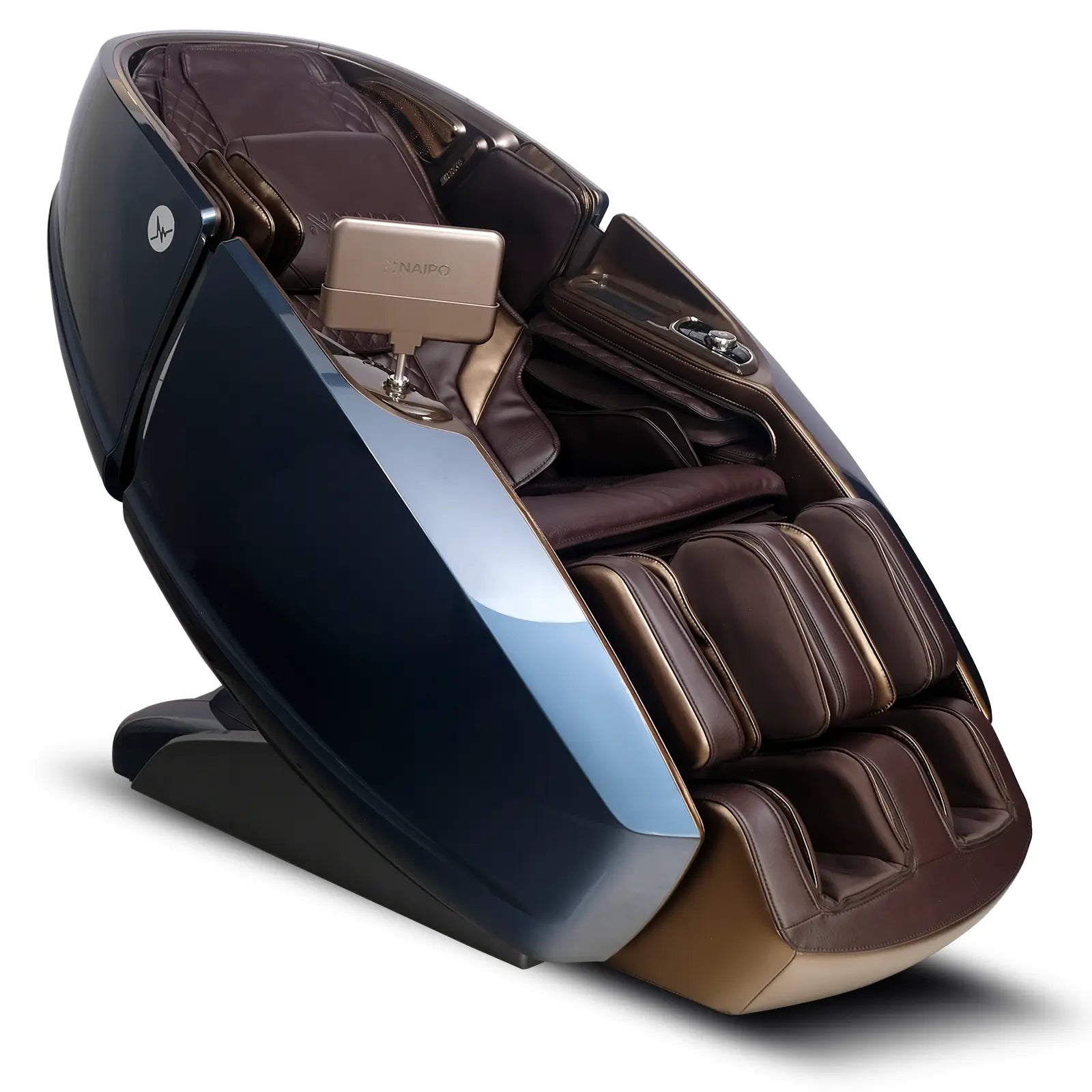
If you realise afterwards that you’d prefer something more intense, try deep tissue. If you want greater flexibility, try Thai. If you prefer a gentler approach, try Shiatsu or Ayurveda. But this is the place to start. And if you’re looking for a break in a massage chair between appointments, you’ll find it at the NAIPO Relax Lounge in Hamburg.
Frequently Asked Questions (FAQs)
What is a Swedish massage?
Swedish massage is the classic Western form of massage, comprising five basic techniques: stroking, kneading, friction, tapping and vibration. It is performed on a massage table using oil; the pressure is moderate and is adjusted throughout the session. In German-speaking countries, it is usually simply referred to as a ‘classic massage’.
What is the difference between a Swedish massage and a classic massage?
There is none. ‘Swedish massage’ is the name commonly used internationally, whilst ‘classical massage’ is the term used in German-speaking countries. Both refer to the same technique using the same five basic strokes.
How does a classical massage work?
After a brief preliminary discussion, you lie down on the massage table under a towel; only the area being treated is uncovered. The treatment begins with long, sweeping strokes using oil to warm up the muscles, moves on to kneading and targeted rubbing, and ends with more sweeping strokes. Afterwards, you remain lying down for a few minutes.
Is a Swedish massage painful?
No, it uses moderate pressure that can be adjusted at any time. In tense areas, you may feel a distinct but tolerable pressure-related pain, which disappears immediately as the pressure is released. Any stabbing or radiating pain is a sign that you should speak up straight away.
Does health insurance cover a classic massage?
Yes, if prescribed by a doctor: Classical massage therapy is a form of treatment and, where indicated, is covered by statutory health insurance, minus the statutory co-payment. Without a prescription – i.e. as a wellness treatment at a massage studio – you’ll have to pay for it yourself.
Which massage is best for beginners?
The Swedish massage. It is the most versatile, the pressure can be adjusted most precisely, and you know in advance what to expect. A first session lasting 45 to 60 minutes allows plenty of time without being too much. Find out more in ‘Which massage is best for beginners?’.
Često postavljana pitanja

Od Uredništvo NAIPO · Stručnjaci za masažu i proizvode iz Hamburga
Stručnjaci za proizvode, servisni tehničari i entuzijasti masaže u tvrtki Alsterwell GmbH — specijalizirani za masažnu tehnologiju više od desetljeća, s vlastitom radionicom i izložbenim prostorima u kojima možete isprobati stolice.
Recenzirao stručnjak David Eberst · Suosnivač tvrtke NAIPO



Ostavite komentar
Ovo je web-mjesto zaštićeno sustavom hCaptcha, čija pravila zaštite privatnosti i uvjeti pružanja usluge vrijede.