





An EMS foot massager sends weak electrical impulses through the soles of your feet, so the foot and calf muscles contract on their own. The one measured benefit: small studies found more blood flow in the leg while the device runs, back to baseline once it is switched off. Typical side effects are tingling, skin redness and sore calves. A session lasts 15 to 30 minutes. It is not safe with a pacemaker or defibrillator, in pregnancy or with a blood clot.
Prikaži sadržaj
- Sljedeći članak: Who should not use a foot massager? Main contraindications
- Sljedeći članak: How long and how often should you use a foot massager?
- Sljedeći članak: When should you not use a foot massager?
- Sljedeći članak: Is an EMS foot massager dangerous?
- Sljedeći članak: Best foot massager for neuropathy: what to look for
- Sljedeći članak: Are foot massagers healthy?
This guide covers, in order: how EMS works, whether it works, what the clinical evidence says about the benefits, the side effects, whether it is safe, how to use it and for how long, and who should avoid it. Related: when foot massagers are not permitted.
What is an EMS foot massager and what does it do?
EMS stands for electrical muscle stimulation. Most EMS foot massagers are flat mats with electrodes in the footplate. As soon as you stand or sit on it barefoot, a weak stimulation current flows through the skin and stimulates the nerves that control the muscles. Your feet and calves tense and relax again without you having to do anything. It feels like a tingling, tapping or twitching sensation, not like kneading.
This means that EMS works differently to a mechanical device that massages using rollers, air cushions or heat. Nothing happens without skin contact: socks, calluses and cream residue dampen the stimulation. How to find the right setting is explained further down.
EMS or TENS: what’s the difference?
Both methods use electrical stimulation via the skin. EMS is designed to contract muscles. TENS targets the nerves and is mainly used in physiotherapy for pain, usually with adhesive electrodes. Many foot mats offer both functions in a single device. This makes no difference to the safety rules set out below; both involve the passage of electrical current through the body.
Do EMS foot massagers work?
They do one thing reliably: they make the foot and calf muscles contract, and that moves blood through the leg while the mat is running. Whether that helps with anything beyond the session has not been shown. If you expect a relaxing tingle and lighter-feeling legs after a long day, an EMS mat usually delivers. If you expect it to treat a medical condition, it will not.
EMS foot massager benefits: what does the clinical evidence say?
The clinical evidence is limited to a few small studies. They show that EMS activates the muscle pump in the foot and calf while it is running. No further benefits have been proven to date. The best data comes from footplate devices, which are built much like the EMS mats on sale:
- Healthy adults: In healthy volunteers (10 for measurements on the vein, 20 on the artery), blood flow in the thigh increased significantly after 15 minutes of stimulation. Once the device was switched off, it returned to baseline levels (Varatharajan 2015).
- People with venous disorders: In a small randomised study involving 22 participants, half used a genuine device for 30 minutes daily over six weeks, whilst the other half used a sham device. In the group using the genuine device, blood flow was higher during use. In the sham group, leg volume increased whilst standing; in the group using the genuine device, it remained almost unchanged. The authors consider larger studies to be necessary before any therapeutic benefit can be inferred (Ravikumar 2017).
Both studies are small, originate from the same London-based research group and examine a specific device. There are no such measurements available regarding weight loss, draining fluid, cellulite or the disappearance of varicose veins. To summarise honestly: many people find EMS pleasant after a long day; their legs feel lighter. It is not a substitute for treatment.
What are the side effects of an EMS foot massager?
In healthy adults and when used correctly, the side effects are mild and subside on their own. User manuals and user reviews mainly mention the following:
- Tingling, which persists for a few minutes after switching off the device.
- Skin redness at the contact points, which usually disappears after a short time.
- Sore muscles in the calves, particularly after the first few sessions or if the intensity is set too high.
- Cramps in the foot or calf, almost always caused by excessive intensity or prolonged use.
- Skin irritation in cases of sensitive skin or if the contact gel is not tolerated.
Stop immediately if you experience a stabbing pain, a cramp that does not subside, dizziness or palpitations. This is not a normal adjustment period. If symptoms persist, speak to your GP. Further information on risks and safe use can be found at Is an EMS foot massager dangerous?
Is an EMS foot massager safe?
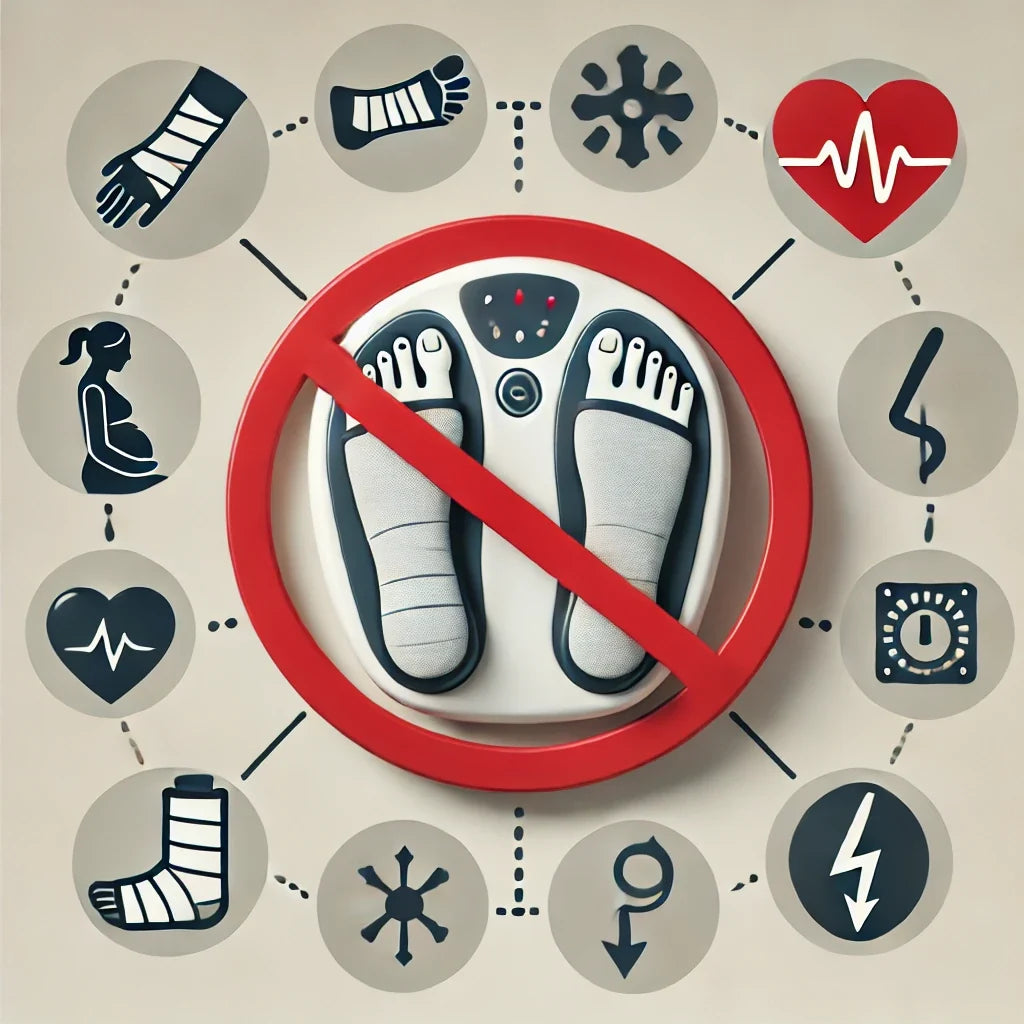
For healthy adults who follow the instructions, yes. The side effects above are mild and pass on their own. It is not safe for people with a pacemaker, defibrillator or other active implant, during pregnancy, with a known or suspected blood clot, or with open wounds on the feet. With diabetes or neuropathy, speak to your GP first. The details for each group are in the section on who should not use one below.
How to use an EMS foot massager
- Barefoot, on clean skin: socks, cream and thick calluses block the current. Slightly damp feet conduct better than very dry ones.
- Sit down: place both feet fully on the electrodes. Sitting is calmer than standing for the first sessions.
- Start on the lowest level: raise it slowly until you feel a clear but comfortable tingle or twitch. It should never hurt.
- Stop on time: 10 to 15 minutes in the first week, later up to 30 minutes.
- Check your feet afterwards: brief redness is normal, blisters or marks that stay are not.
The full step-by-step guide is in How to use an EMS foot massager correctly.
How long and how often should you use an EMS foot massager?
The usual duration is 15 to 30 minutes once a day. In the first week, 10 to 15 minutes on a low setting is sufficient. In the study involving patients with venous disorders, the treatment lasted 30 minutes a day for six weeks (Ravikumar 2017).
According to the measurements taken, using it for longer does not provide any additional benefit: blood flow returned to its baseline level immediately after the device was switched off (Varatharajan 2015). Two shorter sessions a day therefore make more sense than one very long one. The manufacturer’s instructions for your model take precedence. Related: how long and how often you can use a foot massager.
Who should not use an EMS foot massager?
It is not suitable for use with a pacemaker, defibrillator or other active implants, during pregnancy, in cases of known or suspected thrombosis, or if there are open wounds on the foot. A Canadian guideline on electrotherapy in physiotherapy lists active implants, thrombosis and pregnancy as contraindications for stimulation current (Houghton 2010). Many user manuals also include open wounds, epilepsy, recent leg surgery and metal implants in the list of contraindications.
Pacemakers and defibrillators
Stimulation current can interfere with active implants. In a case report, an implanted defibrillator misinterpreted the signal from a TENS device as ventricular fibrillation and delivered unnecessary shocks (Philbin 1998). This involved a TENS device rather than a foot device, but the mechanism is the same. Therefore, the following applies without exception:
Important safety note: Not suitable for use by people with pacemakers.
For further information on what is otherwise possible when receiving massage with an implant, see Massage with a pacemaker.
Pregnancy
There is no evidence of harm caused by EMS to the feet, but this has not been investigated either. Experts advise against the use of electrical stimulation on the abdomen, pelvis and lower back during pregnancy in particular (Houghton 2010); manufacturers of foot devices usually rule out pregnancy entirely. For swollen feet, a foot massage without electricity is the safe choice. Discuss this with your midwife or doctor.
Thrombosis and venous disorders
If you have a known or suspected thrombosis, do not use stimulation or massage. If one calf is swollen, warm or painful, seek medical advice straight away. EMS is not contraindicated for varicose veins and other venous disorders; however, the study mentioned above was conducted under controlled conditions with ultrasound measurements taken before and after treatment. Please check with your GP beforehand to see if it is suitable for you.
Diabetes and neuropathy
Anyone with reduced sensation in their feet due to diabetes or neuropathy may notice an excessively high intensity setting or a sore spot only late. Therefore, only use EMS after consulting your doctor, start at the lowest setting and check your feet afterwards. A systematic review found that TENS provided a slight reduction in pain compared with a placebo in cases of painful diabetic neuropathy (Stein 2013). These were applications used in studies, not foot mats for home use, and there is no evidence that EMS devices heal nerves. Further information on this can be found in the guide Foot massager for neuropathy.
EMS or mechanical foot massager?
| EMS mat | Mechanical device | |
|---|---|---|
| Principle of operation | Electrical stimulation causes the muscles to contract | Rollers, air cushions, vibration, often heat |
| Sensations | Tingling and twitching | Kneading and pressing |
| Skin contact | required, barefoot | not required, can also be used with socks |
| Pacemaker | not suitable | check the manufacturer’s instructions and consult a cardiologist |
| Space | flat mat | larger device for the foot and often the calf |
NAIPO does not sell EMS devices itself. Our foot massagers work mechanically, using kneading, air compression, vibration and heat, depending on the model. Anyone interested can find them in the overview of foot massagers. What Shiatsu does for the feet is explained in What are the benefits of a Shiatsu foot massager? If you’d like to treat your feet, legs and back in a single session, you’ll find suitable models in the massage chair overview.
Frequently asked questions
Is an EMS foot massager dangerous?
Not for healthy adults, provided they follow the instructions. People with pacemakers or other active implants, pregnant women and people with a blood clot should not use it. If you have diabetes or neuropathy, speak to your GP first.
Can I use an EMS foot massager every day?
Yes, 15 to 30 minutes once a day is standard; use it no more than twice a day, with a few hours’ interval between sessions. In the study mentioned, the device was used daily for six weeks.
Why can’t I feel anything?
It is almost always down to contact: wearing socks, feet being very dry, thick calluses or dirty electrodes. Lightly moisten your feet, place them fully on the device and increase the intensity level slowly.
Does EMS help with varicose veins or neuropathy?
There is no evidence for that. The studies measured more blood flow during use, nothing more. Venous and nerve conditions belong with your GP.
What are the benefits of an EMS foot massage mat?
The same as for any EMS foot massager: the calf and foot muscles work while you sit, and many people find their legs feel lighter afterwards. Measured benefits beyond the session are lacking.
Can I also use the device on other parts of the body?
Some mats have connections for adhesive electrodes on the calf, thigh or back. Follow the instructions carefully and never place electrodes on the chest, neck or head.
Sources
- Varatharajan L, Williams K, Moore H, Davies AH (2015): The effect of footplate neuromuscular electrical stimulation on venous and arterial haemodynamics. Phlebology 30(9). doi.org/10.1177/0268355514542682
- Ravikumar R, Williams KJ, Babber A, Lane TRA, Moore HM, Davies AH (2017): Randomised Controlled Trial: Potential Benefit of a Footplate Neuromuscular Electrical Stimulation Device in Patients with Chronic Venous Disease. European Journal of Vascular and Endovascular Surgery 53(1). doi.org/10.1016/j.ejvs.2016.09.015
- Houghton PE, Nussbaum EL, Hoens AM (2010): Electrophysical Agents. Contraindications and Precautions: An Evidence-Based Approach to Clinical Decision Making in Physical Therapy. Physiotherapy Canada 62(5). doi.org/10.3138/ptc.62.5
- Philbin DM, Marieb MA, Aithal KH, Schoenfeld MH (1998): Inappropriate shocks delivered by an ICD as a result of sensed potentials from a transcutaneous electronic nerve stimulation unit. Pacing and Clinical Electrophysiology 21(10). doi.org/10.1111/j.1540-8159.1998.tb00027.x
- Stein C, Eibel B, Sbruzzi G, Lago PD, Plentz RDM (2013): Electrical stimulation and electromagnetic field use in patients with diabetic neuropathy: systematic review and meta-analysis. Brazilian Journal of Physical Therapy 17(2). doi.org/10.1590/S1413-35552012005000083
This guide is not a substitute for medical advice. If you have any symptoms, pre-existing conditions or are unsure, please consult your doctor before using the device for the first time.
Često postavljana pitanja

Od Uredništvo NAIPO · Stručnjaci za masažu i proizvode iz Hamburga
Stručnjaci za proizvode, servisni tehničari i entuzijasti masaže u tvrtki Alsterwell GmbH — specijalizirani za masažnu tehnologiju više od desetljeća, s vlastitom radionicom i izložbenim prostorima u kojima možete isprobati stolice.
Recenzirao stručnjak David Eberst · Suosnivač tvrtke NAIPO


Ostavite komentar
Ovo je web-mjesto zaštićeno sustavom hCaptcha, čija pravila zaštite privatnosti i uvjeti pružanja usluge vrijede.