





A foot massager is medical if it was placed on the market as a medical device. You can recognise this by the MD marking and a medical intended purpose in the instructions, not by the product name. Most devices on sale are wellness devices. That does not make them worse; they simply do not promise any treatment.
Hiển thị mục lục
- Bài viết tiếp theo: Best foot massager for neuropathy: what to look for
- Bài viết tiếp theo: When should you not use a foot massager?
- Bài viết tiếp theo: How long and how often should you use a foot massager?
- Bài viết tiếp theo: Foot massager for neuropathy: benefits and limits
- Bài viết tiếp theo: Who should not use a foot massager? Main contraindications
- Bài viết tiếp theo: Foot massager benefits: do they work and who are they for?
What makes a medical device
In the European Union, the Medical Device Regulation has applied since May 2021. It defines which devices may have a medical purpose, such as relieving a disease or supporting a bodily function. Such a device undergoes a conformity assessment before sale, and the manufacturer must prove that it fulfils the stated purpose.
The label then shows the MD marking next to the CE mark. For higher risk classes, the CE mark is also followed by the number of the notified body that assessed the device. The instructions contain an intended purpose that describes the medical use.
The CE mark alone is not enough
Almost every electrical device in the EU carries a CE mark. It confirms that the general safety rules are met, for example for electrical safety. It says nothing about medical benefit. Only the MD marking and the intended purpose make the difference.
EMS devices are a case of their own
Foot massagers with EMS do not work with rollers or air pressure, but with weak electrical impulses through the sole of the foot. This technology is also used in medicine, and some devices are labelled as medical devices accordingly, others are not. A look at the label clears this up.
EMS devices are not suitable for people with a pacemaker or implanted defibrillator, even if the distance to the implant is large. How the technology works is explained in What does an EMS foot massager do.
Putting wellness devices in context
Most foot massagers work with rotating Shiatsu-style heads, with air chambers that rhythmically enclose the feet and calves, with vibration or with heat. They are built for relaxation. Many people find the massage soothing after a long day on their feet, and that is exactly what these devices are intended for.
Three types at a glance
Devices with rollers knead the sole of the foot and work on specific points, similar to a Shiatsu massage. Devices with air chambers squeeze the feet and calves in a rhythm and release them again, which feels more enveloping. Many models combine both and add heat. Which type is more pleasant is a matter of taste and is best tried out in a shop.
When choosing a device, it is better to look at the features than at the word medical in the name. What matters is an intensity that is continuously or finely adjustable, heat that can be switched off and a washable cover. If you also want to include your calves, you need a model with calf cuffs. The range is under foot massagers.
When you should ask a doctor first
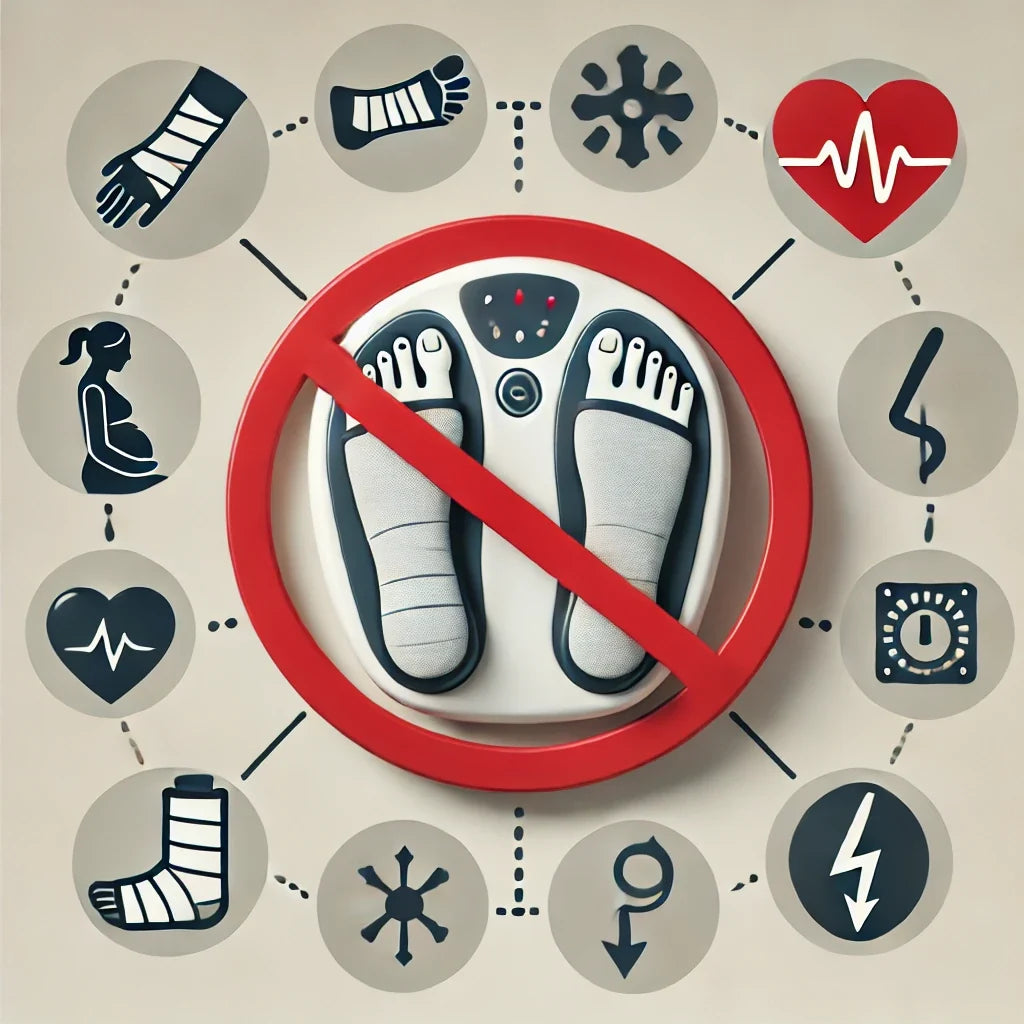
With some conditions, the problem is not the massage but the lack of feeling in the foot. If polyneuropathy or diabetes means you feel heat and pressure less well, you may only notice an excessive intensity once the skin is already irritated.
So clarify use with a doctor beforehand if you have:
- polyneuropathy or diabetes with reduced sensation
- thrombosis or suspected thrombosis
- open wounds, inflammation or recent injuries on the foot
- pregnancy
- a pacemaker or other active implants, especially with EMS
A detailed list is in When should you not use a foot massager. What to bear in mind with polyneuropathy is described in Foot massagers for polyneuropathy.
Frequently asked questions
Is a medical foot massager better?
Not automatically. It has been assessed for a specific medical purpose. For relaxing after a long day, what counts is features and build quality, not classification.
Does health insurance pay for a foot massager?
Generally not. German statutory health insurance covers aids that are prescribed by a doctor and recognised as such. A wellness device is not one of them.
How do I recognise a medical device in an online shop?
By the intended purpose in the product description or instructions and by the MD marking on the device. If both are missing, it is a wellness device.
Which device suits both feet and calves?
Models with air chambers for the calves cover both. You will find them under foot massagers with calf cuffs.
- Best foot massager for neuropathy: what to look for
- When should you not use a foot massager?
- How long and how often should you use a foot massager?
- Foot massager for neuropathy: benefits and limits
- Who should not use a foot massager? Main contraindications
- Foot massager benefits: do they work and who are they for?

Từ Ban Biên tập NAIPO · Các chuyên gia về massage và sản phẩm đến từ Hamburg
Các chuyên gia sản phẩm, kỹ thuật viên dịch vụ và những người đam mê massage của Alsterwell GmbH — chuyên về công nghệ massage trong hơn một thập kỷ, sở hữu xưởng sản xuất riêng và các phòng trưng bày để khách hàng trải nghiệm trực tiếp.
Được kiểm duyệt về mặt chuyên môn bởi David Eberst · Đồng sáng lập NAIPO


Hãy để lại bình luận
Trang web này được bảo vệ bằng hCaptcha. Ngoài ra, cũng áp dụng Chính sách quyền riêng tư và Điều khoản dịch vụ của hCaptcha.