





During manual lymphatic drainage, you lie relaxed on a treatment table whilst the therapist moves the skin using slow, circular strokes and very light pressure. She almost always starts at the neck or torso – in other words, well away from the swelling – and then works her way towards the swollen arm or leg. When prescribed, a treatment session lasts 30, 45 or 60 minutes. In the case of lymphoedema, this is usually followed by compression, as the effects are unlikely to last without it.
Afișează cuprinsul
What is manual lymphatic drainage?
Manual lymphatic drainage is a decongestive therapy. It is designed to support the drainage of tissue fluid via the lymphatic vessels. It was developed by the Danish physiotherapist Emil Vodder in the 1930s, together with his wife Estrid. Most of the techniques used in German practices today can be traced back to him.
It has little in common with a massage in the usual sense. There is no kneading, no rubbing and no tapping. The muscles are not the target at all. The work is carried out on the skin and the tissue directly beneath it, where the fine lymphatic vessels run. Oil is usually not used, as the hands are meant to shift the skin rather than glide over it. To see how a classic massage compares, see Classic Massage: The Course of a Treatment and Techniques.
When it is prescribed
In Germany, manual lymphatic drainage is recognised as a therapeutic treatment. It is prescribed by a doctor, for example for lymphoedema following breast cancer surgery or radiotherapy, for swelling after operations and injuries, or for lipoedema. It may only be carried out by physiotherapists and massage therapists who have completed specific additional training.
The catalogue of therapeutic treatments recognises three levels, named according to the duration of the treatment: MLD-30 for a single body part, MLD-45 for a larger area and MLD-60 as a full-body treatment, for example when both legs are affected. The application of a compression bandage may also be prescribed. Lymphatic drainage is also available as a wellness treatment without a prescription, in which case no medical diagnosis is required and compression is usually not applied afterwards. Anyone looking for a wellness massage at a spa can find regional massage offers on Groupon (advertisement).
How a treatment works
- Initial assessment: At the first appointment, the therapist will ask about your diagnosis, any operations you’ve had and the medication you’re taking. She will examine the swelling, palpate the tissue and often measure the circumference of your arm or leg at fixed points.
- Positioning: You will usually lie on your back, with the affected arm or leg slightly raised. Only the area being treated is uncovered.
- Neck and collarbone: Almost every treatment begins here, even if the leg is swollen. Above the collarbone, lymph drains into the venous blood. This area is stimulated first.
- Trunk and lymph nodes: Next, the lymph nodes closest to the swelling are addressed – the armpit in the case of arm oedema, and the groin and abdomen in the case of leg oedema. This is sometimes accompanied by gentle abdominal breathing.
- The swollen limb: Only now does the therapist work on the arm or leg, moving away from the body towards the hand or foot; however, the manoeuvres themselves always push towards the torso. The idea is to first clear the drainage pathway, then push the fluid along.
- Compression: In the case of lymphoedema, a bandage or compression stocking is applied immediately afterwards. Without these, the fluid can quickly accumulate again.
The treatment is gentle and slow. Each manoeuvre is repeated several times in the same spot before the hands move on a little further. Some people fall asleep during the treatment. Pain or redness of the skin is not a sign that the treatment is working, but an indication that too much pressure is being applied.
The four basic techniques
Standing circles
The flat fingers or the whole hand rest on the skin and push it in small circles without sliding over it. This technique is used primarily on the neck, face and lymph nodes.
Pumping technique
The hand encircles the arm or leg with the thumb and fingers and moves forwards in a wave-like motion. It is suitable for elongated parts of the body such as the upper and lower legs.
Scooping technique
A rotating movement from the wrist, reminiscent of scooping up water. It is mainly used on the forearm and lower leg.
Rotational grip
The hand rotates flat across larger areas such as the back or stomach. Pressure and release alternate at a steady rhythm.
What studies show about the benefits
The best-studied condition is lymphoedema of the arm following breast cancer. A Cochrane review analysed six small studies, each involving between 24 and 45 participants. Lymphatic drainage was safe and well tolerated in all cases. When used in combination with compression bandaging, the swelling was reduced slightly more than with bandaging alone. However, the bandaging accounted for the majority of the effect. Women with mild to moderate oedema appeared to benefit more. Pain and a feeling of heaviness improved in six to eight out of ten participants, regardless of the treatment they received.
A larger Belgian study conducted at five clinics involving 194 women with chronic lymphoedema of the arm provides clearer evidence. All received skin care, compression, exercises and training. In addition, one third received conventional lymphatic drainage, one third received lymphatic drainage guided by imaging of the lymphatic vessels, and one third received sham lymphatic drainage. After three weeks comprising 14 sessions, the reduction in swelling was roughly the same across all three groups. The authors conclude that, in cases of chronic oedema, lymphatic drainage did not provide any clinically significant benefit when used in addition to the other treatment components.
Whether lymphatic drainage following surgery can prevent lymphoedema remains unclear. A second Cochrane review, comprising ten studies and 1,205 participants, found no conclusive evidence on this point. The honest conclusion: Lymphatic drainage is a safe component of decongestive therapy. However, in these studies, compression accounted for the majority of the effect. Follow-up over a year also suggests that success is more likely to be sustained if the custom-made stocking continues to be worn.
Massage devices and massage chairs are no substitute
Lymphoedema requires medical management. It necessitates a diagnosis, a multi-component treatment plan and regular check-ups. No massage device or massage chair can replace this. Medical devices for mechanical compression are available only on prescription, and they are distinct from wellness devices.
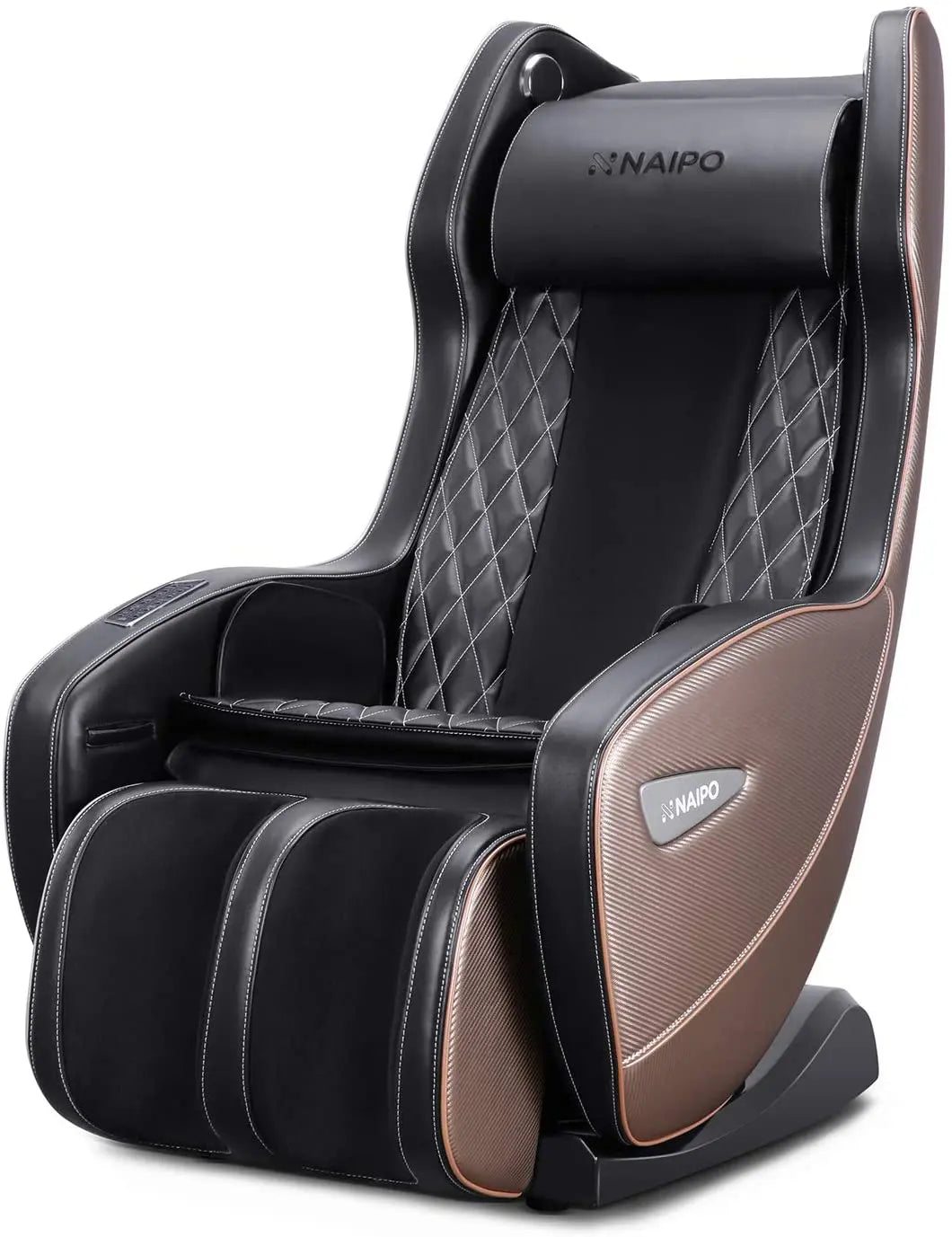
What a device can offer is a sense of well-being after a long day. Many people find the air compression on their feet and calves pleasant when their legs feel heavy in the evening. You can find the relevant devices under Foot massagers with calf cuffs; all others are listed under Massage devices. To find out when they are beneficial for swollen legs and when they are not, see Leg massage devices for swollen legs. To understand what the ‘lymphatic drainage’ programme in a chair actually entails, refer to the guide on Massage chairs with lymphatic drainage. You can try out the chairs at the NAIPO Relax Lounge in Hamburg.
Contraindications and warning signs
Lymphatic drainage should not be carried out in cases of acute inflammation, such as erysipelas with redness, fever and a sensation of heat. The same applies to a recent thrombosis and to severe heart failure, where fluid in the legs and lungs originates from the heart. In cases of hyperthyroidism or cardiac arrhythmia, the therapist will often avoid treating the neck altogether or do so only with great caution.
See a doctor promptly if one leg suddenly swells on one side and is painful, if the swelling becomes hot and red or is accompanied by a fever, and immediately if you experience shortness of breath. If you have varicose veins, please read Is massage permitted for varicose veins? beforehand.
Frequently asked questions
How many appointments are usual?
This depends on the diagnosis and the prescription. During the decongestive phase of lymphoedema, several sessions per week are common, followed by less frequent maintenance sessions, whilst the compression stockings are worn daily.
Can I perform lymphatic drainage myself at home?
For simple techniques, yes, provided you have learnt them at the clinic. In the Belgian study, self-treatment on days without an appointment was an integral part of the programme. It complements the therapy but does not replace it.
Is lymphatic drainage the same as a gentle massage?
No. A massage works on the muscle, whilst lymphatic drainage works on the skin and the tissue beneath it. An overview of the other forms can be found in Types of massage at a glance.
Sources
- Ezzo J, Manheimer E, McNeely ML et al. (2015): Manual lymphatic drainage for lymphoedema following breast cancer treatment. Cochrane Database of Systematic Reviews. doi:10.1002/14651858.CD003475.pub2
- De Vrieze T, Gebruers N, Nevelsteen I et al. (2022): Manual lymphatic drainage with or without fluoroscopy guidance did not substantially improve the effect of decongestive lymphatic therapy in people with breast cancer-related lymphoedema (EFforT-BCRL trial): a multicentre randomised trial. Journal of Physiotherapy. doi:10.1016/j.jphys.2022.03.010
- Stuiver MM, ten Tusscher MR, Agasi-Idenburg CS et al. (2015): Conservative interventions for preventing clinically detectable upper-limb lymphoedema in patients at risk of developing lymphoedema following breast cancer treatment. Cochrane Database of Systematic Reviews. doi:10.1002/14651858.CD009765.pub2
This article is not a substitute for medical advice.

De Redacția NAIPO · Experți în masaj și produse din Hamburg
Experți în produse, tehnicieni de service și pasionați de masaj de la Alsterwell GmbH — specializați de peste un deceniu în tehnologia de masaj, cu propriul atelier și showroom-uri unde puteți testa scaunele.
Verificat din punct de vedere tehnic de către David Eberst · Cofondator al NAIPO



Lasă un comentariu
Acest site este protejat de hCaptcha și hCaptcha. Se aplică Politica de confidențialitate și Condițiile de furnizare a serviciului.